Showing posts with label reflection. Show all posts

Tuesday, October 23, 2012

The Dreaded 'F' Word

Margaret Barr's 'Strange Children' ballet, State Library of New South Wales
That's right. I'm going to use the 'F' word: Failure. Cringe, right? You immediately think of humiliation, shame, everyone pointing and laughing at you. Really, there are no better words for failure than failure.

But I bet there's a lot about failure you don't know. What it really means, how you can use it to make you a better dancer, teacher, and performer. It all lies in the way you look at your failures.

To other people

Failure is something to be swept under the rug. You never speak of it, never learn from it, and if you fail it means you should never try again. Some people do their utmost just to avoid failure, including never trying to do something. How many times have you avoided taking a performance opportunity, or turned down a teaching gig because you were afraid of failing? How many times have you avoided a risky choreography or a new show idea because you were worried about people hating it?

What failure will mean to you

Failure just means something that didn't work. Take another path. Try something different next time. It's not the be all and end all to your dance career, and you shouldn't let it be. Sure, there's people out there who will point out your failures and try to use them against you, but take a good hard look at what they've done, and I bet that they haven't even attempted half the things you have. As Princess Farhana has said, most people can't even leave a voicemail, let alone get on a stage and dance! Failure never has to mean the end of the road. It's just the option to go back and take another road.

How does failure make you a better dancer?

I'm sure we've all seen the articles about famous people who failed their first time around. But how does that compare to your career as a dancer?

It means you take more risks. Don't be afraid of trying something new on stage. Use that song you've been thinking about. Infuse those new salsa classes with your performance. Take that teaching position, even if you don't feel ready for it, or sign up to do that performance. Sure, you might fail, but you also might succeed. You could end up with new friends, a new dance gig, or at the very least, respect from those around you who are afraid to do what you just did.

I got my teaching job when the owner of a studio I once studied at called up to ask me if I could sub for a sick belly dance teacher. Teaching was on my horizon, but I didn't expect to go from a phone call to my first job as a teacher in 8 hours! In the last year, I've lost half my students who didn't like my style, but I've also kept two students who love dancing just as much as I do. They've progressed so much, and I've learned a lot about teaching on the way, and become a better dancer because of it. Sure, I failed in losing some of my students, but I succeeded in learning about what makes me a better teacher and dancer.

Don't be afraid to fail. It means you tried harder than everyone else around you, because you were willing to fail. If you never fail, you've never really danced.
Tuesday, February 21, 2012

Happy Anniversary (or, My Bellydance Story)

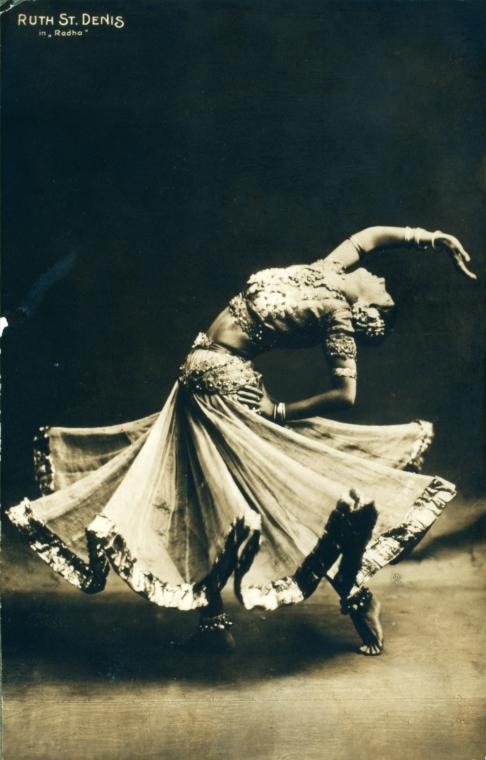
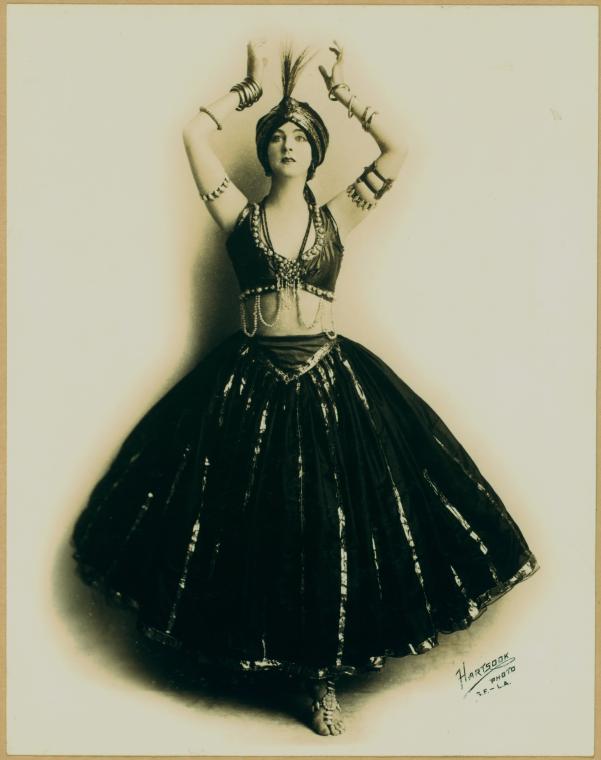
Ruth St. Denis, New York Public Library
Five years ago, around this time of the year, I wandered into a consignment store on Lighthouse Ave. in Pacific Grove, California, and asked the tall blonde lady at the counter if I could come to her bellydance classes.

At the time, I had very little dance experience: I'd done the requisite tap and ballet classes as a child, and then performed on the colorguard in high school but I'd always had a hard time keeping up with almost everyone, was chastised for my claw hands and inability to do a hip circle, and forget school dances! I always tried to hide in a crowd of friends because I had no idea what to do on the dance floor.

My first ever bellydance class was an advanced one--I can't really remember how I ended up in it, but I do remember how hard it was to keep up. Even though I'd studied some of the basic moves using Youtube videos, I still couldn't make my body do what I asked of it. And yet, for some unknown reason, I kept going back.

I kept going back even though I was asked to perform a scant five weeks later, and I kept going back even though a 3/4 shimmy remained a completely foreign concept to me, and asking me to move my hips in conjunction with my arms was like asking me to move a mountain. But I faithfully went to class twice a week and became so enamored with bellydance that when I moved back home and away from Pacific Grove less than a year after my first class, one of the first things I did in my new place was find a bellydance teacher.

Everything I am today stems from that first bellydance class I took. I have danced on stages when I was so terrified I couldn't feel my legs and kept smiling, I have met women and men I've admired from afar and discovered that they are no different than I am, I have made amazing new dance friends, and I have stopped being so afraid of being myself. This year alone, I am doing things that I would have never imagined myself doing, and because of my desire to be a better dancer I am in the best shape of my life. Bellydance has so changed who I am that one day a few months ago, I was driving home from the bellydance classes that I now teach (who'd have thought I'd be teaching?) and realized that, at that very moment, I had never been happier before in my life.

So, for the space I have to dance on, the music I have to dance to, my teachers and my ancestors, and most of all, all the dancers I have to dance with: thank you for the last five years, and here's to five times many more!

Tuesday, February 14, 2012

You Can Be Just As Talented As Rachel Brice

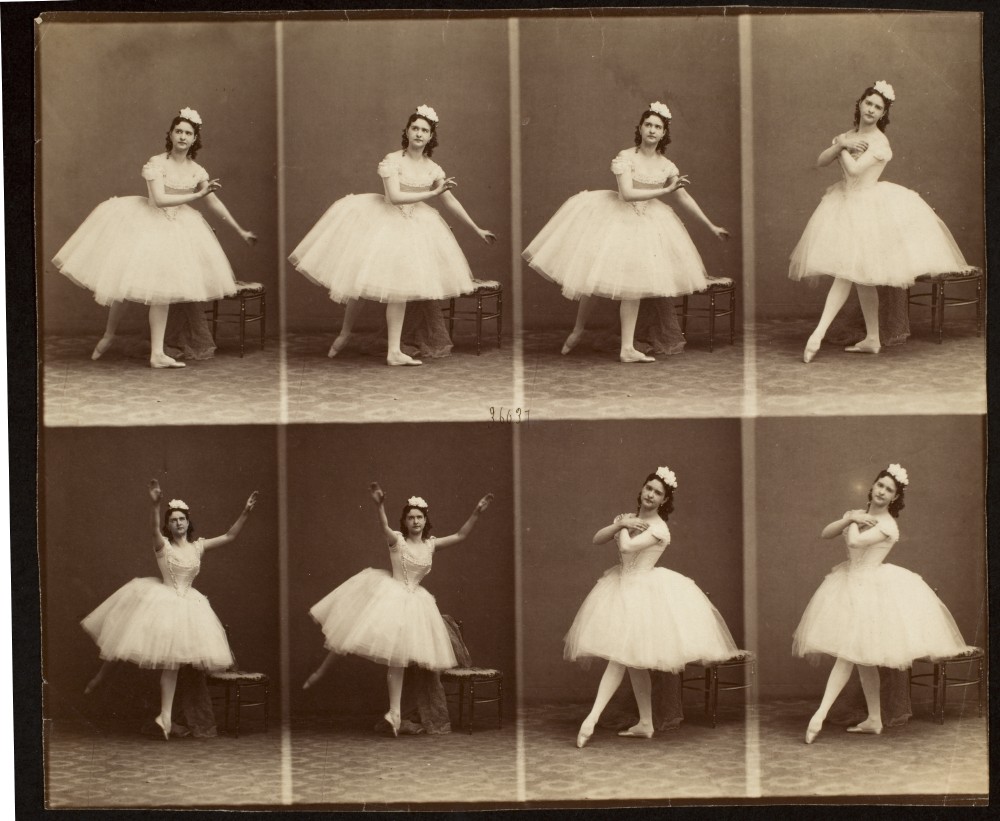
Petipa, George Eastman House
How do you usually practice?

You'd think that practicing at all outside of class is enough, right? As long as you put some music on and shimmy while you're doing the dishes, as long as you dance to a song or two while you're drying your hair, as long as you practice zilling to the top 40 in the car, you're still practicing, right?

But then you get to see all those beautiful dancers who are so flexible and so sharp and just so good, and you tell yourself that they're just really talented. Natural-born bellydancer, right?

Wrong.

First of all, nothing you do in bellydance is natural, except maybe a hip shimmy, which is really just exaggerated walking. And yes, some people are taller or shorter or heavier or skinnier than you. But apart from that, there's very little difference between you and that dancer you envy*cough*admire. Just the one thing, in fact.

They use deliberate practice.

What is deliberate practice? Well, it's right there in the name. You are practicing deliberately. "Well, isn't all practice deliberate?" you say. "I'm not just accidentally doing chest lifts here!"

To practice deliberately, you not only need to take the time to practice, but you also need motivation to practice, an understanding of your vocab of moves, self-awareness, and repetition.

So how do you get these things?

Well, motivation is the tough one. If you're not motivated to practice or even dance, you should ask yourself whether or not this is the thing for you. But even if you know you want to be a dancer, motivation can be hard to come by when you've had a long day and you're tired and sore and you feel clumsy. For those days, put together a motivation pack. Get some music that gets you dancing, even if it's not your typical bellydance music. If you've got a great DVD that really inspires you, save it for the tough practice nights. Or get a list of YouTube videos that make you want to move and watch those just before practicing. Another way to motivate yourself is to sign up for a performance--nothing will get you practicing faster than an upcoming performance.

Understanding your bellydance vocab means getting to class and learning. And it doesn't just have to be your regular class, either. Check around and see if there are any workshops or new teachers coming through your area. Or plan a road trip with your troupe and visit another studio. Never stop learning new things, and bring them to the table every time you practice. And if you learn something new that doesn't quite make sense to you, don't feel bad about asking for a better explanation.

To be self-aware while you're dancing means getting feedback on your progress, whether it be from a mirror, a video, a friend or teacher, or even just the way the move feels on your body. If you've been dancing long enough, you'll know when you've done something right or not. And it doesn't hurt to ask your teacher or a dance friend to tell you when you need to work on something. Make sure you videotape your performances, and every once in awhile, trot out the camera for your practice, too, so you can check to see if there's anything you need to work on. Another good idea is to keep a dance journal and write down what you're working on and how it feels. That way you can go through it and see where you're improving and where you're lagging behind.

Repetition is the easiest one--you've already been doing this. Just keep practicing it!

Next time you practice, pick at least three things you want to work on, and make sure they are moves you know how to execute. Then, throw on your favorite piece of music, turn on the video camera or grab a friend, and spend fifteen minutes practicing those three moves. When the fifteen minutes is up, watch the video or ask you friend to see how you did. Take notes on what you need to work on, put it in your dance journal, and then use it to structure your next practice. In no time, you'll be just as talented as those dancers you admire!

Tuesday, January 17, 2012

Who is Your Muse?

A muse has been described as many things: elves that live in the corner of your room, beautiful women who whisper into your ear, your dance steps flying towards you on a gentle breeze or wild gust of wind. "Sing in me, muse, and through me tell me the story," says Homer's Odyssey.

While a muse may never be something you'd consider as a dancer, it's actually a huge benefit. For one thing, it takes the pressure off you. Say you're just having a bad day in dance class. Instead of telling yourself what a terrible dancer you are, and how you'll never perform again, you just remind yourself that you still showed up to class and gave it your all, and your muse just happened to take the day off.

Or if you choreograph a beautiful performance, and everyone in the audience is coming up to you after the show to congratulate you on your genius and insight, etc. etc., rather than take all the glory for yourself and fan the fires of your ego, you tell yourself that your muse happened to be particularly inspiring that week, and you can't take all the credit (but out loud, just smile and say "Thank you").

Just because you're interpreting the music or dancing someone else's steps doesn't mean you can take inspiration from somewhere outside yourself. After all, dancing without inspiration might as well be not dancing at all, for all the lack of emotion it conveys to your audience.

Until recently, I've never considered having a dance muse. Sure, I've admired other dancers for their skill, flexibility, dance background, and creativity, and I've certainly been inspired by other dancers, I've never actually chosen a muse. However, as a writer, I find the idea of a muse not only plausible, but sometimes necessary. I've even seen writers who physically embody the spirit of their muse in a figuring or stuffed animal!

Your muse, of course, can be anything you want, whether it's a spirit that lives inside your head, a long-dead or distant dancer, or your favorite pet. But every time you put on some music to dance to, remember your muse, even if all you're doing is drilling.

If you're a frequent visitor to this site, you'll see that I use a lot of photos of early modern dancer Ruth St. Denis. I enjoy her work (what little I can find of it), as well as how beautiful she is in various costumes and photographs. She seems to capture so many different emotions, depending on the photo.

As I get more serious about my dancing, I'm relying on a muse to inspire me. For me, this is the spirit of Ruth St. Denis. I like the idea of a dancing ancestor whispering words of inspiration into my ear (or ignoring me completely!), and while I admire plenty of other more modern dancers, having someone a little less solid, perhaps, than people I can still have a chance at meeting in real life, makes her more a spirit of genius. When I dance from now on and I'm at a loss for what to do, I will ask myself, "What would Ruth do?"

Who is your muse?


Friday, December 9, 2011

How Much is Enough?

Ruth St. Denis, New York Public Library
If you're a worrier like me, you might find yourself wondering, "Am I dancing enough?"

Well, enough varies from dancer to dancer. Whether you're a hobbyist or recreational dancer, a pre-professional, or a professional making money teaching and gigging, enough can be as little as just a class or two to several hours a day. For example, a recent poll on the Middle Eastern Culture and Dance Facebook page asked professional and pre-professional dancers how often they practice outside of class. The answers varied from 'not at all' to 8-10 hours a week. Most dancers said they either didn't have time, due to outside interests, or that they taught so often that they didn't have much time for practice.

We've all got plenty of other things that demand our attention: errands, family, our survival job, social lives--these things demand their own time, and it can be hard to find places to fit in your practice. Then you feel guilty when you realize that another day's gone by and your hip scarf and zills are still sitting in your dance bag, untouched. So how much is enough?

In order to determine what's enough for you, you have to look at two things: your time and your goals.

Goals: What do you want to get out of bellydance? Is it just a hobby? Or do you have dreams of the stage? Figuring this out will help you figure out how much time a week you want to spend practicing. If you're just dancing for fitness and recreation, you definitely don't want to spend 5-10 hours a week outside of class, practicing. However, if you want to break into professional dancing, two classes a week isn't going to cut it.

Take some time to work out what you want from bellydance, and what you hope to achieve. You may even want to set a time frame on it, such as "In five years, I want to be teaching and performing x number of times a week." This will give you something to aim for, and once you know what you want, you can figure out a plan to get there.

Time: If you find yourself constantly pressed for time, try keeping a time log. This is a lot like a food log, except you're going to write down what you're doing every day, and for how long. Since this will be an extremely detailed log, you'll only want to do this for a week, unless you want to drive yourself crazy. But this will help you determine what it is you're actually doing with your time, and will help you find places where you can condense activities, or clear a space to practice. Once you figure out how to space things, try your new schedule for a week or two. If it's not working, scrap it and try something else.

What if you've looked at your schedule every which way and there's just no room for practice? Try getting up 15 minutes earlier. Fifteen minutes isn't going to affect your sleep, and that's plenty of time to warm up with some shimmies and do a song or two of drills, with some stretching. Or, see if you can get an hour or two on the weekends for some intense practice time.

Whatever you decide, make sure that your 'enough' is whatever it is that makes you feel like a better dancer when you go to bed. And remember, what's 'enough' for you may not be 'enough' for another dancer, or even too much for another dancer. Don't waste time comparing yourself to others and making yourself feel guilty. As long as you are dancing for you, that's enough.

Saturday, December 3, 2011

Breaking up is hard to do

The studios that I've danced at usually take a break for Christmas and New Year's. This week I'm facing my last practice class for the rest of the year, and the classes I teach are breaking the following week. Neither is planning on starting up again until the first week of January. Everyone is so busy around this time and it's sometimes just easier to get things done when you don't have dance class to fit into your increasingly busier schedule. While taking a break from your dance class is a relief, though, don't you feel a little bit guilty for not dancing during that time?

So what do you do during your dance break? Well, as with everything else, you have options. There's a ton of things you can do on your own time, depending on your schedule and how much you can fit in. Take a look at some of your choices:

  • Do nothing: This is probably the easiest thing to get away with over a holiday dance break. However, it's also the thing that will leave you feeling the guiltiest. After all, if you do nothing, aren't your skills going to degrade? Will your teacher notice? The thing is, though, sometimes you do need a break to do nothing, especially if you take several classes a week over the year, or dance more than five hours a week. You don't want to risk burning out, and if you're starting to hit that point, then take a full break from dancing and enjoy it. Of course, there are still some things you can do to keep the dance fires alive.
  • Try something new: Do you want to keep dancing but are feeling a little burnt out on bellydancing? Look around and see if there's any workshops or short classes in other styles of dance going on in your area. Flamenco and ballet are good ones to take to supplement your bellydance, and ballroom is an old favorite that you can take with a partner or friend. This is also a good time to go with something crazy and fun, like pole dancing or burlesque. Whatever you pick, just have fun with it!
  • Drills: No matter how good you get, you'll never escape drills. However, instead of drilling your usual hip and chest work, take the time to work on something that's been giving you trouble. Think back over the last few months. Is there a move or a piece of choregraphy you couldn't wrap your head around? Ask your teacher for some final pointers before the break, and devote some practice time to just that. Make sure you try different pieces of music so you don't get bored.
  • Watch dancers: Christmas is when all the ballet troupes are doing their version of The Nutcracker. There's also plenty of other dance theater in different styles and stories.  If you have a theater nearby, check out what they have to offer and make a date to see a professional dance show. You can even get your dance sisters and brothers in on it by forming a group to go see a show. 
  • Read a book: There are so many books on bellydancing out there. Stop by your library and pick up one or two, or hit up Amazon.com and buy something. Not only do you get some entertainment, but a book is the perfect escape from the crazy holiday season. One of my favorite fiction bellydance books is *The Bellydancer, by DeAnna Cameron. Other favorites that cover some of the history and stories of other bellydancers are A Trade Like Any Other, Serpent of the Nile, and Grandmother's Secrets.
  • Watch a video: Not just bellydance practice videos, though if you've been eying one for a while, now's the time to get it and try out. There's also documentaries about dancers (not just belly dancers) and Egypt that you can watch if you want to get a little bit of history and real life in there. If you've got Netflix, they have several dance documentaries available on streaming.

As you can see, there's plenty for you to do during your holiday break. Personally, I'm planning to see a folklorico ballet, read two books, one on the history of Egyptian performers and one on dance anatomy, and drill shimmies. I also have Zoe Jakes's new DVDs on my Christmas list, so if I get it, I'll be running through it at least once.

Do you have a favorite thing to do when you're taking a break from dancing?

*Disclaimer: I don't know any of these authors personally, though I've met Ms. Cameron several times through my teacher. I don't receive anything from the links except good karma.

Friday, September 16, 2011

What's Bellydance?

I've noticed a disturbing trend among bellydancers. It makes me really sad sometimes, especially since bellydance in general is a very misunderstood artform, and we already have to fight for some modicum of respect.

Some bellydancers refuse to acknowledge other bellydancers.

In fact, there are some belly dancers out there who claim that their fellow bellydancers aren't real bellydancers.

With the current generation of bellydancers exploring what they can do with the dance and the creative ways they can update it, modernize it, or just make it their own, the old school dancers and their protegees are refusing to claim some branches of tribal bellydance as part of the overall tree of bellydance. There are even some tribal and ATS dancers out there who insist that what they are doing isn't bellydance. Why would they say that?

A Brief History

There are thousands of resources out there that explain, in detail, where belly dance came from. For the CliffsNotes version, the origins of belly dance are found in the Middle East, the Mediterranean, and North Africa. So right away we don't even have a specific area to work with. And, like most things that have have developed and evolved along with the human race over the centuries, it wasn't a single culture or race that came up with the idea.

Eventually, belly dance moved over to the United States, via the The Chicago World's Fair of 1893 and the many iterations of Little Egypt. Some of the burlesque dancers caught on, and so did Hollywood, and of course, everyone put their own spin on it. This lead us into the 70s and 80s, where the folkloric aspect of belly dance started spreading to Renaissance Faires and the Society of Creative Anachronism, which eventually led to Jamila Salimpour, Masha Archer, Carolena Nerricio, and the creation of FatChance BellyDance and American Tribal Style. From there, ATS dancers began taking some of the FatChance moves and spinning them into their own style, and tribal fusion, improve tribal style, alternative tribal, urban tribal, gothic tribal, et al., were born.

The one line that sums it up: It's all bellydance.

That's right. From your restaurant cabaret dancer to your Egyptian dancer covered in sequins, to the tribal troupe wearing kuchi jewelery and plain cotton skirts to the fusion dancer wearing yoga pants and minimalist accessories, it's all bellydance. Like it or not, we all came from the same place. We evolved from the Ghawazee dancers who inspired raqs sharqui, which became bellydance when it moved to Europe and the U.S.

What's not Bellydance? Well, you've got your hobbyist dancer who wants to learn a few moves to look sexy. Or the woman who takes six classes and decides she knows everything she needs to know about bellydance. Or the dancer who calls herself tribal fusion without ever learning what she's fusing. Or the bellydance that is so far removed from the basic movements that it's basically modern dance or hip hop.

None of us are performing "true bellydance" because there is no true bellydance. We evolved to avoid becoming extinct, like Ghawazee style, the knowledge of which is now mostly contained within the Banat Mazzin family in Luxor, Egypt.


It all comes down to respect

We spend so much time asking for respect from the general public, that we don't even realize we're crippling ourselves by infighting and refusing to change. It's true that tribal fusion, alternative tribal, and other kinds of tribal are the most popular styles right now, but tribal wouldn't have existed if it weren't for the women before us who evolved the dance, who asked, "What can I do with this?"

As long as you recognize where you come from, and respect the men and women who came before you, you're a bellydancer. And what you do is bellydance.