Monday, December 19, 2011

Playing to Your Strengths

"... leave acrobatics to others. It is positively more than I can bear to see the pressure such steps put on your delicate muscles and the severe arch of your foot. I beg you to never again try to imitate those who are physically stronger than you. You must realize that your daintiness and fragility are your greatest assets. You should always do the kind of dancing which brings out your own rare qualities instead of trying to win praise by mere acrobatic tricks."
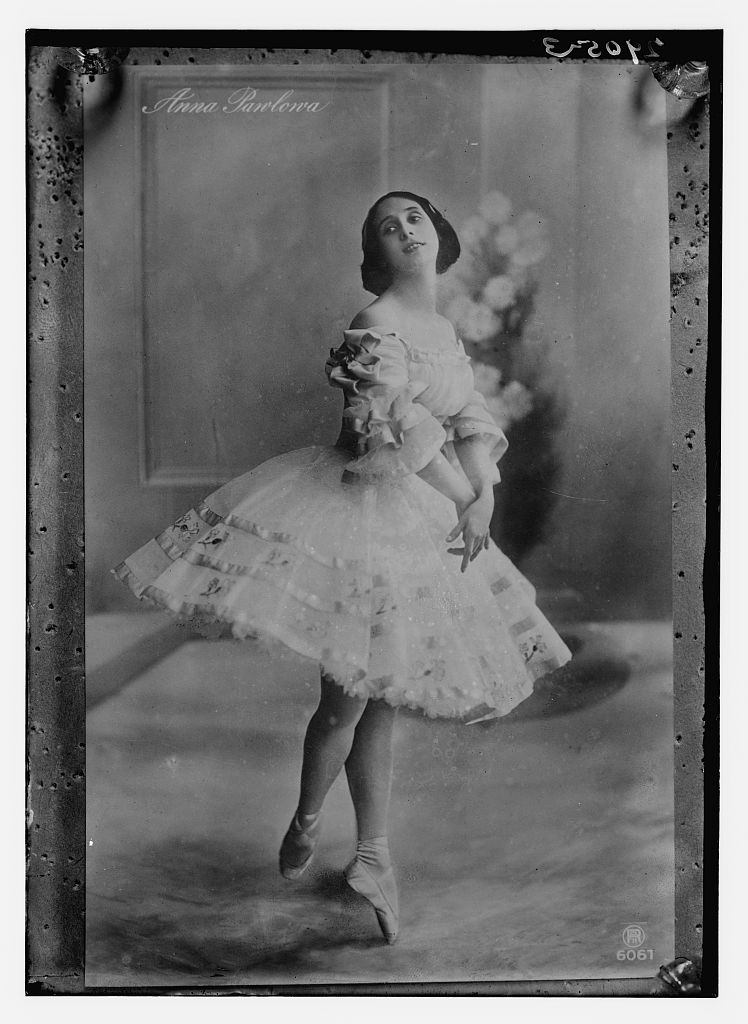
Dancer Anna Pavlova, from the Library of Congress
-Pavel Gerdt, said to ballet dancer Anna Pavlova

You know how it is: you see a dancer try something new that elicits zagahreets and wild applause from the audience, and you're dying to try it out. Except you can't quite get it right: either you don't quite have the skill for it, you're not certain of how she pulled it off, or your body is just physically incapable of doing that move. Obviously, that makes you an inferior dancer, right?

Of course it doesn't! First of all, every dancer is different--and yes, as trite as it may seem, every dancer is special in her own unique way. Second, if another dancer starts a trend, every other bellydancer is going to start imitating her, and suddenly you're one of many. You don't want to be just another face in the crowd, right?

You should always play to your strengths. If you can't do something as well or better than another dancer, so what? Bellydance has tons of other movements you can use. You shouldn't beat yourself up because you can't do a perfect Turkish drop or popping and locking just aren't making sense to you.

"But every bellydancer should be able to execute that move!" you might say. But the beauty of bellydance is that you don't have to do everything perfectly. Sure, you should get the posture in your sleep, and be able to do the basic movement vocabulary. But after that, the dance is yours. You can't do a backbend like Rachel Brice (and who can, really?), but you still know the mechanics of one, and if you physically can't do a move, why would you want to hurt yourself and risk your dance career?

Instead of worrying about what you can't do well, think about what you can do well. For instance, I have a back injury and will probably never be able to do a backbend. But I have strong legs and great hands. So I concentrate my performances on level changes that make the most of my leg strength, and beautiful hand movements that really show off all the work I've done practicing my flureos. Sure, sometimes when I see a really great backbend, I get jealous, but then I go home and work on the things that I know I can do well, and I feel better about my abilities as a dancer.

As a performer, your job is to present yourself in the best light, which means using every tool in your arsenal to make yourself look good. Knowing what you're best at, physically and mentally, is a big part of that, even if it means giving up on never achieving what a stronger or more flexible dancer can. However, if you concentrate on what you're good at, it's a good bet that no one will care.

About Anna Pavlova:
Anna Pavlova was a Russian ballet dancer from the early 1900s. The ballerina of her time was a strong, compact dancer, and Anna was gangly with weak ankles, and thus, wasn't able to perform choreography the same way as other dancers. Nevertheless, she often revised her performances, and even her pointe shoes, to suit her strengths, and ended up bringing back the style of romantic ballet, eventually winning audiences over with her graceful, ethereal look.  She eventually formed her own company and died in 1931, at the age of 41, after refusing a life-saving operation that promised to end her dance career forever.

Friday, December 9, 2011

How Much is Enough?

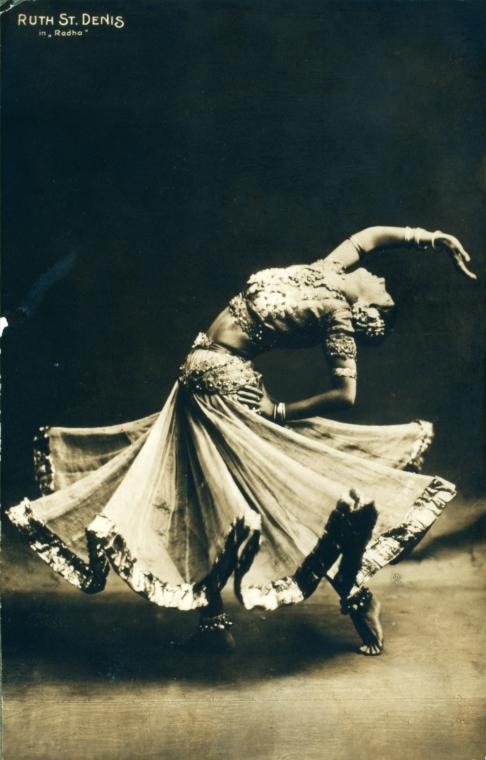
Ruth St. Denis, New York Public Library
If you're a worrier like me, you might find yourself wondering, "Am I dancing enough?"

Well, enough varies from dancer to dancer. Whether you're a hobbyist or recreational dancer, a pre-professional, or a professional making money teaching and gigging, enough can be as little as just a class or two to several hours a day. For example, a recent poll on the Middle Eastern Culture and Dance Facebook page asked professional and pre-professional dancers how often they practice outside of class. The answers varied from 'not at all' to 8-10 hours a week. Most dancers said they either didn't have time, due to outside interests, or that they taught so often that they didn't have much time for practice.

We've all got plenty of other things that demand our attention: errands, family, our survival job, social lives--these things demand their own time, and it can be hard to find places to fit in your practice. Then you feel guilty when you realize that another day's gone by and your hip scarf and zills are still sitting in your dance bag, untouched. So how much is enough?

In order to determine what's enough for you, you have to look at two things: your time and your goals.

Goals: What do you want to get out of bellydance? Is it just a hobby? Or do you have dreams of the stage? Figuring this out will help you figure out how much time a week you want to spend practicing. If you're just dancing for fitness and recreation, you definitely don't want to spend 5-10 hours a week outside of class, practicing. However, if you want to break into professional dancing, two classes a week isn't going to cut it.

Take some time to work out what you want from bellydance, and what you hope to achieve. You may even want to set a time frame on it, such as "In five years, I want to be teaching and performing x number of times a week." This will give you something to aim for, and once you know what you want, you can figure out a plan to get there.

Time: If you find yourself constantly pressed for time, try keeping a time log. This is a lot like a food log, except you're going to write down what you're doing every day, and for how long. Since this will be an extremely detailed log, you'll only want to do this for a week, unless you want to drive yourself crazy. But this will help you determine what it is you're actually doing with your time, and will help you find places where you can condense activities, or clear a space to practice. Once you figure out how to space things, try your new schedule for a week or two. If it's not working, scrap it and try something else.

What if you've looked at your schedule every which way and there's just no room for practice? Try getting up 15 minutes earlier. Fifteen minutes isn't going to affect your sleep, and that's plenty of time to warm up with some shimmies and do a song or two of drills, with some stretching. Or, see if you can get an hour or two on the weekends for some intense practice time.

Whatever you decide, make sure that your 'enough' is whatever it is that makes you feel like a better dancer when you go to bed. And remember, what's 'enough' for you may not be 'enough' for another dancer, or even too much for another dancer. Don't waste time comparing yourself to others and making yourself feel guilty. As long as you are dancing for you, that's enough.

Saturday, December 3, 2011

Breaking up is hard to do

The studios that I've danced at usually take a break for Christmas and New Year's. This week I'm facing my last practice class for the rest of the year, and the classes I teach are breaking the following week. Neither is planning on starting up again until the first week of January. Everyone is so busy around this time and it's sometimes just easier to get things done when you don't have dance class to fit into your increasingly busier schedule. While taking a break from your dance class is a relief, though, don't you feel a little bit guilty for not dancing during that time?

So what do you do during your dance break? Well, as with everything else, you have options. There's a ton of things you can do on your own time, depending on your schedule and how much you can fit in. Take a look at some of your choices:

  • Do nothing: This is probably the easiest thing to get away with over a holiday dance break. However, it's also the thing that will leave you feeling the guiltiest. After all, if you do nothing, aren't your skills going to degrade? Will your teacher notice? The thing is, though, sometimes you do need a break to do nothing, especially if you take several classes a week over the year, or dance more than five hours a week. You don't want to risk burning out, and if you're starting to hit that point, then take a full break from dancing and enjoy it. Of course, there are still some things you can do to keep the dance fires alive.
  • Try something new: Do you want to keep dancing but are feeling a little burnt out on bellydancing? Look around and see if there's any workshops or short classes in other styles of dance going on in your area. Flamenco and ballet are good ones to take to supplement your bellydance, and ballroom is an old favorite that you can take with a partner or friend. This is also a good time to go with something crazy and fun, like pole dancing or burlesque. Whatever you pick, just have fun with it!
  • Drills: No matter how good you get, you'll never escape drills. However, instead of drilling your usual hip and chest work, take the time to work on something that's been giving you trouble. Think back over the last few months. Is there a move or a piece of choregraphy you couldn't wrap your head around? Ask your teacher for some final pointers before the break, and devote some practice time to just that. Make sure you try different pieces of music so you don't get bored.
  • Watch dancers: Christmas is when all the ballet troupes are doing their version of The Nutcracker. There's also plenty of other dance theater in different styles and stories.  If you have a theater nearby, check out what they have to offer and make a date to see a professional dance show. You can even get your dance sisters and brothers in on it by forming a group to go see a show. 
  • Read a book: There are so many books on bellydancing out there. Stop by your library and pick up one or two, or hit up Amazon.com and buy something. Not only do you get some entertainment, but a book is the perfect escape from the crazy holiday season. One of my favorite fiction bellydance books is *The Bellydancer, by DeAnna Cameron. Other favorites that cover some of the history and stories of other bellydancers are A Trade Like Any Other, Serpent of the Nile, and Grandmother's Secrets.
  • Watch a video: Not just bellydance practice videos, though if you've been eying one for a while, now's the time to get it and try out. There's also documentaries about dancers (not just belly dancers) and Egypt that you can watch if you want to get a little bit of history and real life in there. If you've got Netflix, they have several dance documentaries available on streaming.

As you can see, there's plenty for you to do during your holiday break. Personally, I'm planning to see a folklorico ballet, read two books, one on the history of Egyptian performers and one on dance anatomy, and drill shimmies. I also have Zoe Jakes's new DVDs on my Christmas list, so if I get it, I'll be running through it at least once.

Do you have a favorite thing to do when you're taking a break from dancing?

*Disclaimer: I don't know any of these authors personally, though I've met Ms. Cameron several times through my teacher. I don't receive anything from the links except good karma.

Monday, November 14, 2011

Your 20 Percent Time: Getting Creative With Your Choreography

Have you heard about Google's 20 percent time? It's where they give their engineers and programmers a day a week to spend on personal projects. An entire day, to work on anything they want, paid for and encouraged by their company. The bonus for Google is that these side projects often result in new features for the company: both Gmail and GTalk were born out of their 20 percent program. It works because employees are given a chance to do something that isn't work, to explore new opportunities and lines of study that wouldn't be open to them in their normal projects. The creativity required to build new things comes out of that 20 percent time.

So how does this impact a dancer? Well, have you ever seen a dancer perform something creative that's not quite belly dance? Every wonder how a dancer figured out that that kind of fusion might look good, or that that piece of music might have a great story to dance to it? Did you ever ask yourself, as you're drilling hip lifts and hip drops for the millionth time, how can I be more creative as a dancer? Well, the answer to that is the 20 percent program.

Sure, you should be drilling the basics and practicing your choreo and your cues, but if this is all you do, that creative bolt out of the blue that you need to make something new and different isn't going to happen. Sure, you can watch those dancers and figure maybe inspiration will strike you, but in reality, it doesn't happen as often as you think. The best way to make those creative bolts of lightening happen is by creating your own 20 percent time.


Your own 20 percent time can be anything you want. Have you always admired ballet or flamenco or hip hop but love belly dance too much? Try to find a class in something other than belly dance and study a new style on the side. Hear a piece of music on the radio that sounds really danceable but it's not a bellydance song? Practice to it anyway. If you're still apprehensive, just play something inspiring and move. It doesn't have to be belly dance--try acting out an emotion, or come up with a scene in your head and dance it out. Play with it, see what you come up with, and if it feels great, take it further.

Of course, we all have constraints on our time, so your 20 percent time doesn't have to be exactly 20 percent. Maybe it's a day a week, or even just a song. Spend at least a little time doing something different. Once you get used to experimenting, don't forget to try adding it to a choreo or your solos. You'll soon have other dancers coming up to you to ask where you came up with that idea.

By creating your own 20 percent time, you'll quickly find that you're more creative, and that you're a better dancer because of it!

(And if you'd like a more personal example, this blog is an example of how I utilize my 20 percent time)

Obstacles and Creativity

Ruth St. Denis, New York Public Library
Have you ever wondered how you can be more creative? Ever watched another dancer's amazing performance or choreography and wondered, "How can I do that?" Or, if you're like me, have you ever tried to choreograph something new, or improv to a song that felt really inspiring when you started, but now feels like an un-rhythmical mess? You've probably told yourself that you just aren't that creative, or maybe you're not cut out for performing, but in fact, there is a way you can help your creativity along.

There are a lot of suggestions from other creatives on how to get past your "dancer's block." Find an inspiring piece of music, watch other dancers, try a new style of dance, record yourself dancing over and over until you find what works--there are plenty of things you can do to spark your creativity. But one of the best things you can do is to limit yourself, rather than trying to step outside the box.

Psychological studies have shown that when people are given limits and obstacles, their imaginations soar. Our everyday lives are all about maximizing efficiency, and eventually we just try to find the easiest route (remember those one-class wonders who are professionals after one session?). However, when your brain is forced to operate within certain constraints, you are forced to come up with new ways to be original. Just look at ballet: a dance that has been around for more than a century, has strict rules on methods of movement, costuming, and music, and yet it's still one of the most beautiful art forms. Even instructors of modern dance, with all of its outside-the-box style, recommend that students study ballet first.

So how do you apply this to your own dance practice? Drill, baby, drill! Practice the basics, over and over, and then see what you can do with them. It's how the greatest fusions are born. Dancers started out in jazz or flamenco or ballet, started studying bellydance, and fused the two together because they knew the constraints of each dance and were able to take them to greater heights. But even if you're just sticking to bellydance, put on some music and practice the moves that form the foundation of bellydance. You're never too old to pretend to be a beginner. Or, if you're a little tired of drilling, find a difficult choreography and work on mastering it for a performance.

As for me, I'm going to start taking ballet next year. I've always loved it, and after going back and forth on different dances to try, I've chosen to stick with the classics. Of course, it is also the easiest class for me to get to--I don't want to make my obstacle too big!

So if you want to get more creative, give yourself an obstacle or limitation. Try to master a basic move you've had trouble with in the past, start taking a new dance style in addition to the one you have, or learn a new choreography. You'll not only get better at your new skill, but you'll also find your imagination expanding!

 Source: Need to Create? Get a Constraint

Own it! When Things Don't Go the Way You Planned

Once I was supposed to perform a group flamenco piece at the Orange County Fair. I had several other shows that summer and couldn't come up with the money for a flamenco costume, so I rented from another dancer who was the same size as me. Because I was renting the costume, we decided that the costume's owner would bring it to the show. Unfortunately, she thought I was bringing it. So, here we are at the show, I'm supposed to be on stage in an hour, and I have no costume to wear!
Luckily, we had ten other dancers who were performing a gypsy fusion bellydance piece just before our flamenco piece. With their help, I was able to borrow a skirt from one of the dancers and use a camisole and jacket from my practice gear and assemble a costume. In the end, no one even noticed I was wearing something different.

One of the reasons no one noticed was that I owned my costume. Even though I was wearing something vastly different than the other two girls I was dancing with, I didn't hide in the back or shrink away from the spotlight.

When you're on stage, it's important to own your stage, no matter what. When you own your stage, you can do no wrong. If you're in a group choreography and turn the wrong way or perform the wrong part, keep a smile on your face and a confident stance, and your audience will believe that everything happened the way it was supposed to.

Owning it helps in improvisational situations, too. If you're doing a group improv, sometimes things don't happen the way you planned. I've had my muscle memory kick in at the wrong time, resulting in my cuing a move I didn't mean to cue. Rather than derail the train I was leading, I followed through with the move and changed it at the first opportunity. The girls behind me didn't notice anything was wrong, nor did the audience.

Whatever you do on stage, do it with confidence. Strut your stuff with your head held high, and tell everyone you meant to do that.

Monday, November 7, 2011

But I Don't Feel Like Practicing Tonight!

I love dancing. I hear music and I start composing choreo to it. I flureo while on the phone. I do shimmies walking around the office.

But there are nights when I get home and I look around my messy house and my undone laundry and the pile of dishes in the sink and say, "Do I really have to go to practice tonight?"

Of course, the answer is Yes! I have to go to practice. I want to be a professional bellydancer. I want to teach more students, I want to dance on more stages. I have to go to practice if I want that. But sometimes, it's hard to remember my end goal, or even why I want that end goal in the first place.

In a case like that, I have a few tricks up my sleeve to get my body and my brain cooperating and off to practice.

How to conquer your practice resistance
Put on your dance clothes: When you feel yourself start to slide into the Don't Wanna Practice Blues, put on your dance clothes. For this to work, you should have special dance clothes--maybe a special top or practice skirt, or some yoga pants just for dance class. I have several skirts I wear just to practice that get me in the mood for dancing.

Watch some bellydance videos: Have a favorite dancer or troupe? Look up some of their videos on YouTube and spend a few minutes watching them. I always get inspired by watching the dancers I admire, and it always makes me want to jump up and start dancing myself. Watching other dancers also serves to remind me what I'm aiming for, and I remind myself that I'm not going to get good just sitting around watching videos.

Put on some music: Did you just buy some new dance music? Put it on and try out a few moves. Even if you're just walking around the house cleaning or cooking dinner, play your favorite dance music and watch the way your body reacts. Your body will just start dancing naturally, and you'll find yourself in the mood to move faster than you think.


Recruit a dance buddy: I introduced a friend of mine to bellydance, and now that she lives near me, we carpool to class. Whenever there's an extra class or workshop, I give her a call and we go together. It helps to have someone else go with you, and remind you to go to class. It adds the extra little bit of accountability you might need to succeed.

Set up prepayment with your teacher: Still having trouble getting to class? Pay for a month's worth of classes in one go, and have your teacher set up an expiration date. If you reach the expiration date and haven't used all your classes, you've lost them. Some studios will do this automatically, to discourage the one-class wonders, but you can easily do it to yourself if you're on good terms with your teacher or studio. Knowing that there's money riding on your attendance will give you the motivation to get to class.

If you've tried everything and you're still having trouble getting to class, maybe it's time to consider that something isn't working. If you come to this conclusion, don't despair yet! Maybe it's just the teacher's style, or the women you're dancing with. It's okay to admit that maybe you'd get along better with another group, or learn better from a different teacher. Really take a look at your situation, and if you really want to stick with bellydance, make sure you figure out what works for you and keeps you going to class.