Showing posts with label creativity. Show all posts

Tuesday, April 24, 2012

I'm Just Not Creative!

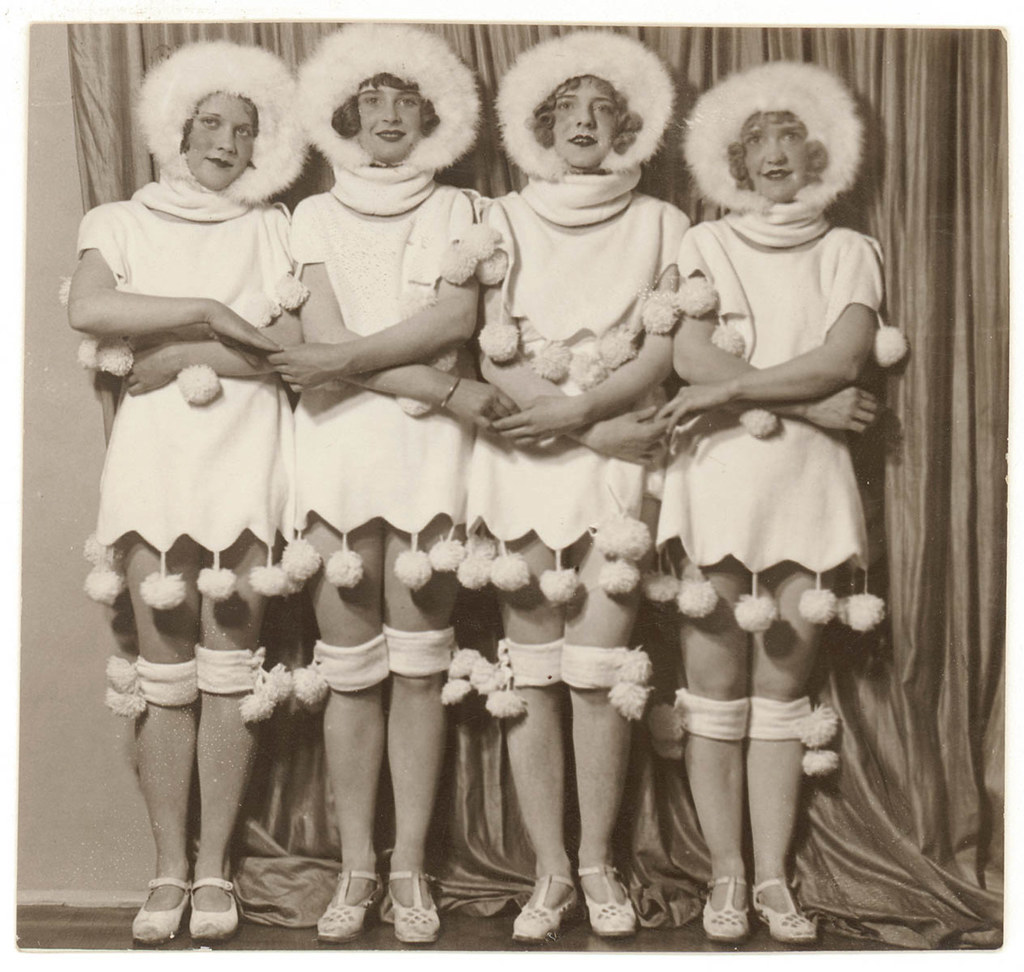
Chorus Girls, 192-; New South Wales Collection

Ever think you're one of those people who just can't be creative? Do you listen to a song and think you could come up with the best moves to do with it, but when you try dancing to it, you can't remember any of it? Do you see other dancers' beautifully handmade costumes and wonder if you could ever make those costumes yourself? Or have you ever seen a really great stage show and thought to yourself "Where did they learn to do that? I could never be that creative!"

While just getting on a stage and dancing in public is difficult enough, really getting good at putting on a show might seem like an impossible skill. And it is hard: there's the music you have to pick, the costumes you have to put together, the choreography to come up with, your makeup and hair to do. Doesn't it ever feel like some of this stuff just comes naturally to other dancers? Don't you ever wonder if there's a secret to being creative?

Well, there is, and it's very simple: Practice.

Just do it!
The secret to getting better at being creative is to practice at being creative. You've going to have to work at it. Dance every chance you get, perform every chance you get. Put on music and try to make up something to go with it, even if it's just a 24-count section. If you're worried about someone seeing your attempts, lock yourself in your room or studio. You might feel uncoordinated or silly, but do it anyway.

If it's costuming you're having trouble with, just start pulling all your bellydance costuming out of the closet. Or, pick another dancer's costume and try to put together something similar using just the items in your closet. Just because you're not going to wear it on stage doesn't mean it's wasted time. You can even put the costume on and parade around the house in it, maybe film yourself dancing it a few times.


But I've tried to and I'm just not any good!
Have you really, though? Have you tried making up choreography or improv to a song? Have you done more than one performance? Have you tried dancing for your friends to see what they think? Have you gone out in public in that costume? You're better than you realize, but when you look at yourself through your own eyes, it's hard to see yourself as a great dancer.


Another thing that will help is to practice with friends. Put together a choreography workshop where you and your friends can work on individual pieces. It really helps to get feedback on your work sometimes, and you'll find that you're not as bad as you think you are. With your costume, get your friends together and do a costume swap. Throw everyone's things in the middle and start pulling pieces out and put costumes together.

Keep it simple
If you're still having trouble coming up with choreography or costumes, just narrow it down. Find a piece of music you like, and challenge yourself to use the same three moves. See what you can do with it. Record yourself if you can, and see what you can come up with during that time. Or, if you already know a choreography from class, just do the same choreo to the same music, and change the emotion. Do it sad, or romantic, or angry, and watch how the emotion completely changes the pieces.

With a costume, put together a 'dance uniform' and just add one or two things to it to make it different each time. Start with a basic skirt and bra, then change up the jewelry or belt, or do something different with your hair. Play around with your accessories.

Record, record, record
While you're playing around with choreography and costuming, make sure you keep a record of all the things you do. Pick up a cheap video camera, or record yourself on your phone. Take pictures of your costumes, either while you're wearing them or laid out somewhere. Keep them somewhere on your computer, and date them, so you can go back and watch yourself progress.

Before you know it, you'll have become much better at being a creative dancer, and you'll wonder how on earth you ever thought you couldn't do it!



Tuesday, January 17, 2012

Who is Your Muse?

A muse has been described as many things: elves that live in the corner of your room, beautiful women who whisper into your ear, your dance steps flying towards you on a gentle breeze or wild gust of wind. "Sing in me, muse, and through me tell me the story," says Homer's Odyssey.

While a muse may never be something you'd consider as a dancer, it's actually a huge benefit. For one thing, it takes the pressure off you. Say you're just having a bad day in dance class. Instead of telling yourself what a terrible dancer you are, and how you'll never perform again, you just remind yourself that you still showed up to class and gave it your all, and your muse just happened to take the day off.

Or if you choreograph a beautiful performance, and everyone in the audience is coming up to you after the show to congratulate you on your genius and insight, etc. etc., rather than take all the glory for yourself and fan the fires of your ego, you tell yourself that your muse happened to be particularly inspiring that week, and you can't take all the credit (but out loud, just smile and say "Thank you").

Just because you're interpreting the music or dancing someone else's steps doesn't mean you can take inspiration from somewhere outside yourself. After all, dancing without inspiration might as well be not dancing at all, for all the lack of emotion it conveys to your audience.

Until recently, I've never considered having a dance muse. Sure, I've admired other dancers for their skill, flexibility, dance background, and creativity, and I've certainly been inspired by other dancers, I've never actually chosen a muse. However, as a writer, I find the idea of a muse not only plausible, but sometimes necessary. I've even seen writers who physically embody the spirit of their muse in a figuring or stuffed animal!

Your muse, of course, can be anything you want, whether it's a spirit that lives inside your head, a long-dead or distant dancer, or your favorite pet. But every time you put on some music to dance to, remember your muse, even if all you're doing is drilling.

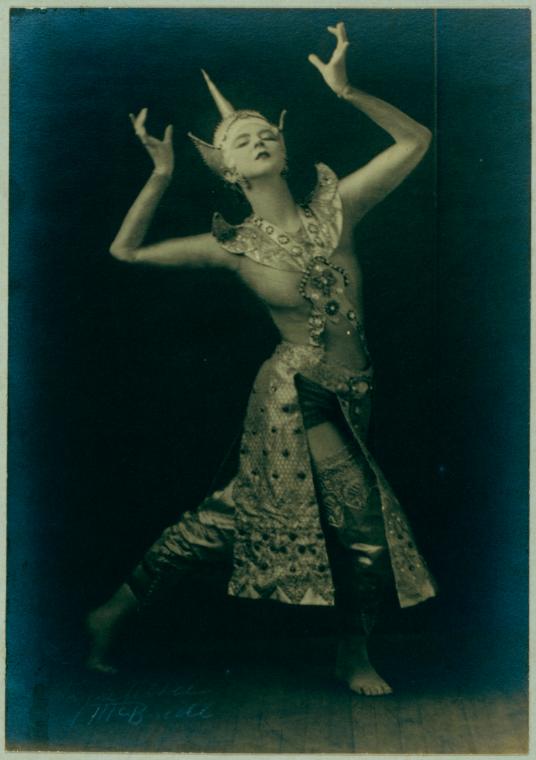
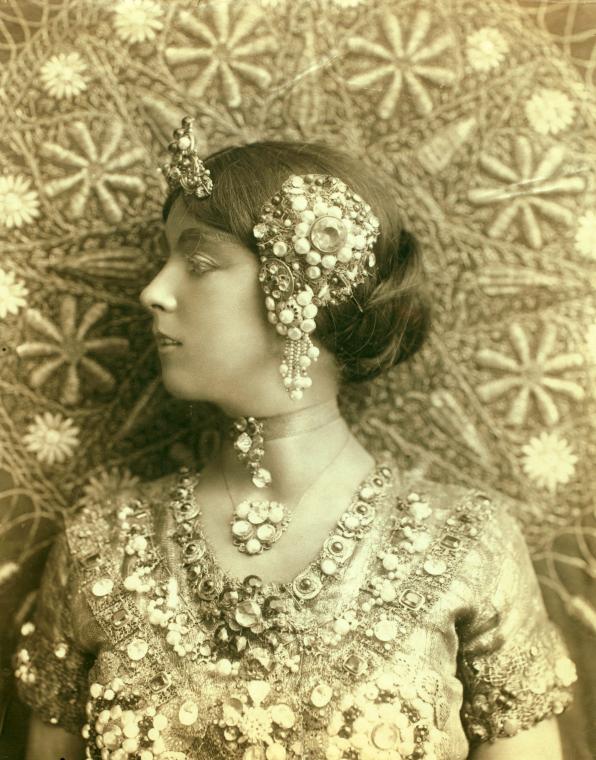
If you're a frequent visitor to this site, you'll see that I use a lot of photos of early modern dancer Ruth St. Denis. I enjoy her work (what little I can find of it), as well as how beautiful she is in various costumes and photographs. She seems to capture so many different emotions, depending on the photo.

As I get more serious about my dancing, I'm relying on a muse to inspire me. For me, this is the spirit of Ruth St. Denis. I like the idea of a dancing ancestor whispering words of inspiration into my ear (or ignoring me completely!), and while I admire plenty of other more modern dancers, having someone a little less solid, perhaps, than people I can still have a chance at meeting in real life, makes her more a spirit of genius. When I dance from now on and I'm at a loss for what to do, I will ask myself, "What would Ruth do?"

Who is your muse?


Tuesday, January 10, 2012

Bellydance Makes You Smarter!

Ted Shawn and Denishawn Dancers, New York Public Library
Let's get one thing straight: bellydance is hard. Once you get past the basic "this is a hip circle, this is a rib cage circle, this is a shimmy," you have to start layering moves and walking and turning and executing a 3/4 shimmy while moving your arms. And then there's choreography to create and memorize, or if you do improv, you have to come up with moves while on stage, leading a figurative train behind you and working to keep it on track.

Well, rest assured. Not only will all that practice make you a better dancer, but it'll also make you smarter and lower your risk for Alzheimer's and dementia. A study done by the Albert Einstein College of Medicine showed that senior citizens who danced frequently greatly reduced their risk of dementia.

And you don't have to wait for your retirement years before reaping the intelligent benefits of dance, either. Dancing forces you to think creatively, and try alternate paths to a solution. Working out a difficult choreo, whether it's creating it for your students, making up your own for a solo performance, or just trying to memorize it before your troupe's show, will force you to create new paths in your brain to access the same thing: in this case, your choreo.

Or if improv's your style, there's a lot of creative thinking there. Just being the leader provides plenty of opportunity for creative thinking, since you have to come up with your moves on the spot. And if you derail the train of dancers behind you, you have to think fast to get it back on track and still make it look like you meant to do that. Even following behind the leader requires creative thinking, if you're a step behind or miss a cue.

All of this brain work we dancers have to do while practicing and performing our art means that you'll never see a stupid bellydancer. And the more frequently you dance, the more benefit you'll have. It doesn't matter if you're fifteen or fifty, any dance you do will be beneficial to your mental health.

Monday, November 14, 2011

Your 20 Percent Time: Getting Creative With Your Choreography

Have you heard about Google's 20 percent time? It's where they give their engineers and programmers a day a week to spend on personal projects. An entire day, to work on anything they want, paid for and encouraged by their company. The bonus for Google is that these side projects often result in new features for the company: both Gmail and GTalk were born out of their 20 percent program. It works because employees are given a chance to do something that isn't work, to explore new opportunities and lines of study that wouldn't be open to them in their normal projects. The creativity required to build new things comes out of that 20 percent time.

So how does this impact a dancer? Well, have you ever seen a dancer perform something creative that's not quite belly dance? Every wonder how a dancer figured out that that kind of fusion might look good, or that that piece of music might have a great story to dance to it? Did you ever ask yourself, as you're drilling hip lifts and hip drops for the millionth time, how can I be more creative as a dancer? Well, the answer to that is the 20 percent program.

Sure, you should be drilling the basics and practicing your choreo and your cues, but if this is all you do, that creative bolt out of the blue that you need to make something new and different isn't going to happen. Sure, you can watch those dancers and figure maybe inspiration will strike you, but in reality, it doesn't happen as often as you think. The best way to make those creative bolts of lightening happen is by creating your own 20 percent time.


Your own 20 percent time can be anything you want. Have you always admired ballet or flamenco or hip hop but love belly dance too much? Try to find a class in something other than belly dance and study a new style on the side. Hear a piece of music on the radio that sounds really danceable but it's not a bellydance song? Practice to it anyway. If you're still apprehensive, just play something inspiring and move. It doesn't have to be belly dance--try acting out an emotion, or come up with a scene in your head and dance it out. Play with it, see what you come up with, and if it feels great, take it further.

Of course, we all have constraints on our time, so your 20 percent time doesn't have to be exactly 20 percent. Maybe it's a day a week, or even just a song. Spend at least a little time doing something different. Once you get used to experimenting, don't forget to try adding it to a choreo or your solos. You'll soon have other dancers coming up to you to ask where you came up with that idea.

By creating your own 20 percent time, you'll quickly find that you're more creative, and that you're a better dancer because of it!

(And if you'd like a more personal example, this blog is an example of how I utilize my 20 percent time)

Obstacles and Creativity

Ruth St. Denis, New York Public Library
Have you ever wondered how you can be more creative? Ever watched another dancer's amazing performance or choreography and wondered, "How can I do that?" Or, if you're like me, have you ever tried to choreograph something new, or improv to a song that felt really inspiring when you started, but now feels like an un-rhythmical mess? You've probably told yourself that you just aren't that creative, or maybe you're not cut out for performing, but in fact, there is a way you can help your creativity along.

There are a lot of suggestions from other creatives on how to get past your "dancer's block." Find an inspiring piece of music, watch other dancers, try a new style of dance, record yourself dancing over and over until you find what works--there are plenty of things you can do to spark your creativity. But one of the best things you can do is to limit yourself, rather than trying to step outside the box.

Psychological studies have shown that when people are given limits and obstacles, their imaginations soar. Our everyday lives are all about maximizing efficiency, and eventually we just try to find the easiest route (remember those one-class wonders who are professionals after one session?). However, when your brain is forced to operate within certain constraints, you are forced to come up with new ways to be original. Just look at ballet: a dance that has been around for more than a century, has strict rules on methods of movement, costuming, and music, and yet it's still one of the most beautiful art forms. Even instructors of modern dance, with all of its outside-the-box style, recommend that students study ballet first.

So how do you apply this to your own dance practice? Drill, baby, drill! Practice the basics, over and over, and then see what you can do with them. It's how the greatest fusions are born. Dancers started out in jazz or flamenco or ballet, started studying bellydance, and fused the two together because they knew the constraints of each dance and were able to take them to greater heights. But even if you're just sticking to bellydance, put on some music and practice the moves that form the foundation of bellydance. You're never too old to pretend to be a beginner. Or, if you're a little tired of drilling, find a difficult choreography and work on mastering it for a performance.

As for me, I'm going to start taking ballet next year. I've always loved it, and after going back and forth on different dances to try, I've chosen to stick with the classics. Of course, it is also the easiest class for me to get to--I don't want to make my obstacle too big!

So if you want to get more creative, give yourself an obstacle or limitation. Try to master a basic move you've had trouble with in the past, start taking a new dance style in addition to the one you have, or learn a new choreography. You'll not only get better at your new skill, but you'll also find your imagination expanding!

 Source: Need to Create? Get a Constraint